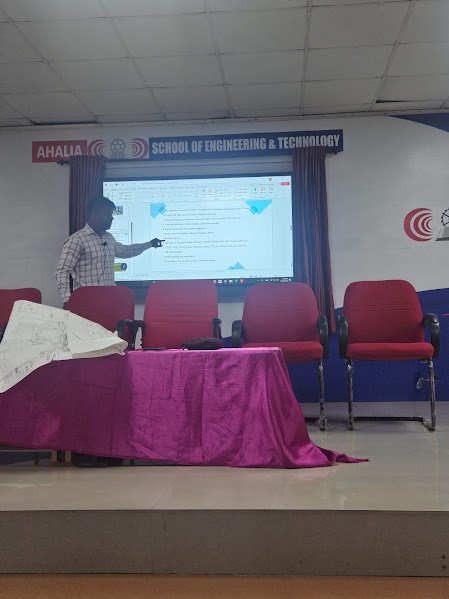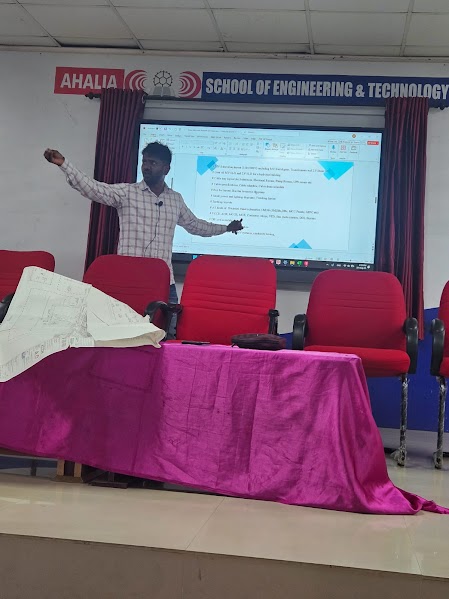


A training program on “MEP – Pathways and Opportunities for Engineering Graduates” was conducted with the objective of providing students with awareness and practical insights into the Mechanical, Electrical, and Plumbing (MEP) domain. The session focused on the growing opportunities for Civil, Mechanical, and Electrical & Electronics Engineering graduates in MEP-related projects across the globe.
Key Highlights of the Program
- Overview of Global Construction Projects
Students were given an introduction to the wide range of construction projects currently being executed in different countries. These included high-rise buildings, airports, metro systems, industrial complexes, and smart city projects, all of which heavily depend on MEP systems for their successful execution and operation. - Types of Works in MEP Projects
The session explained the various works undertaken in MEP projects, such as:
- Mechanical Works – HVAC (Heating, Ventilation, and Air Conditioning) installations,
firefighting systems, and building services. - Electrical Works – Power distribution, lighting, earthing systems, and control systems.
- Plumbing Works – Water supply, drainage, sewage treatment, and rainwater harvesting.
- Scope for CE, ME, and EEE Engineers
- Civil Engineers (CE): Structural integration with MEP services, coordination in building
design, and material management. - Mechanical Engineers (ME): HVAC design and execution, firefighting systems, piping, and
mechanical utilities. - Electrical & Electronics Engineers (EEE): Power systems, control panels, low-voltage
systems, building automation, and electrical safety.
- Training in Understanding Drawings
The resource persons emphasized the need for graduates to familiarize themselves with project drawings, such as layout plans, schematic diagrams, and sectional views. Students were advised to practice reading standard drawings to gain confidence and accuracy in interpreting them. - Skills Required for MEP Jobs
Students were guided on the essential skills required to excel in MEP careers, including:
- Technical proficiency in design and execution.
- Knowledge of relevant software (AutoCAD, Revit MEP, etc.).
- Analytical and problem-solving ability.
- Communication and coordination skills for working in multidisciplinary teams.
- Studying and Understanding Drawings
Practical methods to study and interpret MEP drawings were explained, focusing on symbols, legends, scaling, and specifications. Emphasis was given to practice through real project drawings to gain practical exposure. - Experience in Power Systems and Drawings
The session highlighted the importance of hands-on experience in understanding power system components such as transformers, switchgear, cables, and distribution systems. This knowledge directly helps in interpreting and preparing electrical drawings for real projects. - Bill of Materials (BoM) and Specification Study
The students were introduced to the concept of preparing and analyzing a Bill of Materials (BoM). They learned how to verify specifications, quantities, and standards, which are crucial for material procurement, project costing, and quality assurance in MEP projects.
Conclusion
The training program successfully provided students with an in-depth understanding of the MEP industry and its significance in modern construction projects. The session emphasized the importance of developing technical and analytical skills, understanding project drawings, and gaining practical exposure to become industry-ready professionals. Students gained clarity on the various career opportunities available in MEP across different engineering disciplines and the pathways to excel in this field.