
Objectives of the Activity
- To introduce students to the complete Analog and Digital IC Design flow using Cadence tools.
- To provide hands-on exposure to industry-standard EDA tools used in VLSI design.
- To familiarize students with RTL synthesis, circuit simulation, schematic capture and physical layout design.
- To enhance students’ practical skills and prepare them for higher studies and careers in VLSI and semiconductor industries.
C. PO/PSO Mapping
- PO1 – Engineering Knowledge
- PO2 – Problem Analysis
- PO3 – Design/Development of Solutions
- PO5 – Engineering Tool Usage
- PO11 – Life-long Learning
- PSO1 (Level 3): Develop electronics-based solutions for real-life challenges integrating sustainable practices.
- PSO2 (Level 2): Uphold ethics and values in designing sustainable technologies while embracing lifelong learning for professional growth.
D. Activity Description
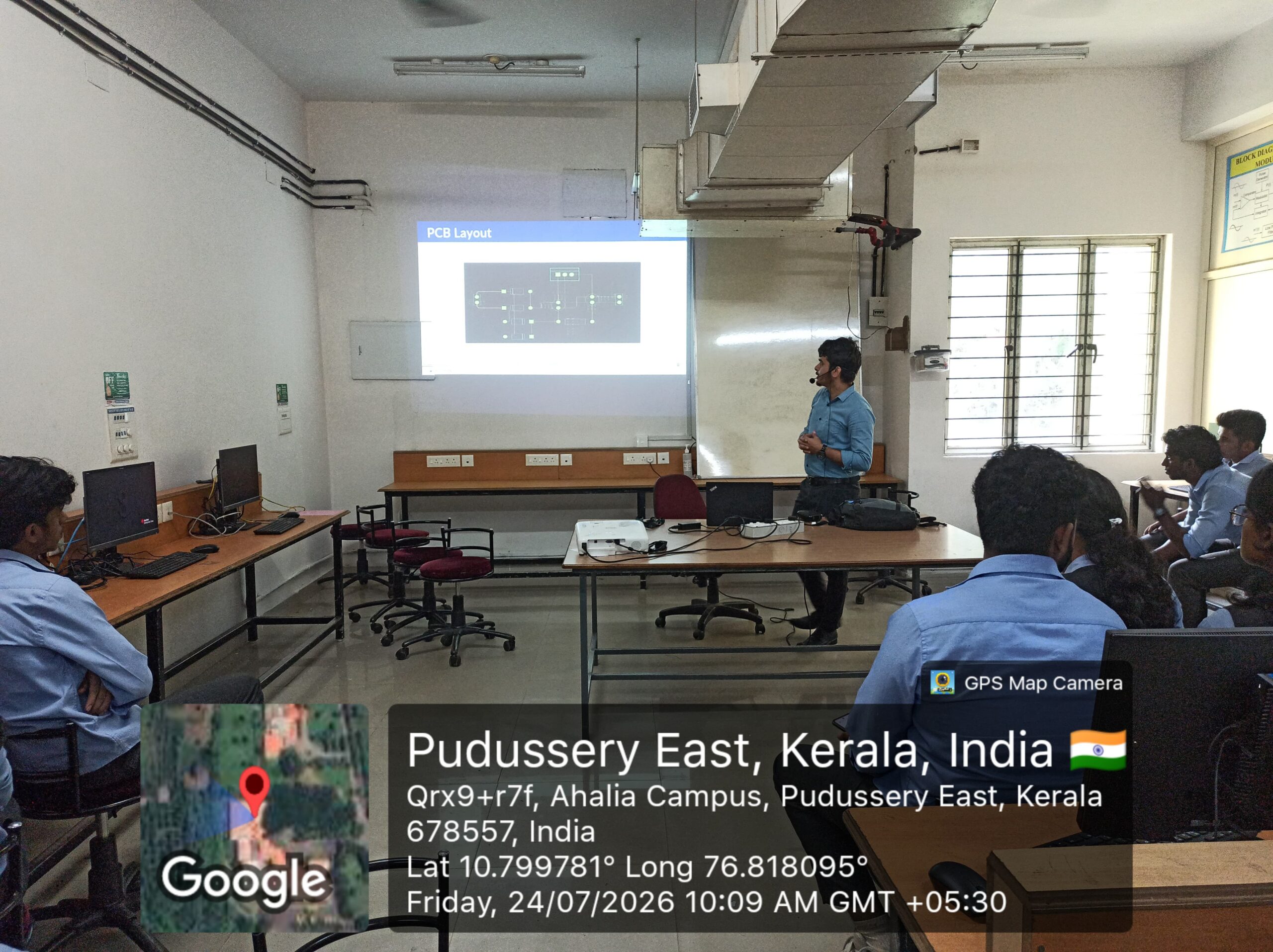
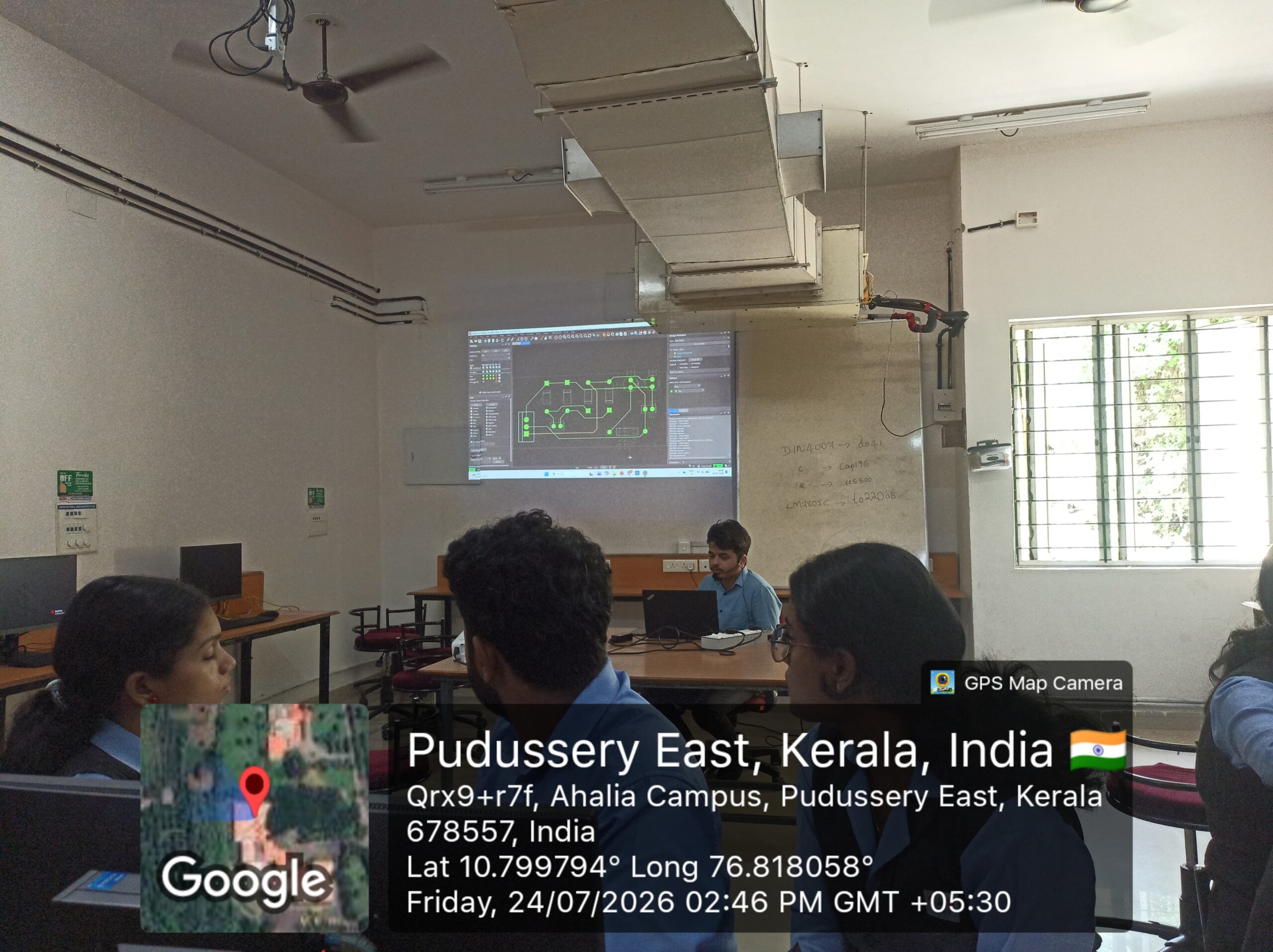
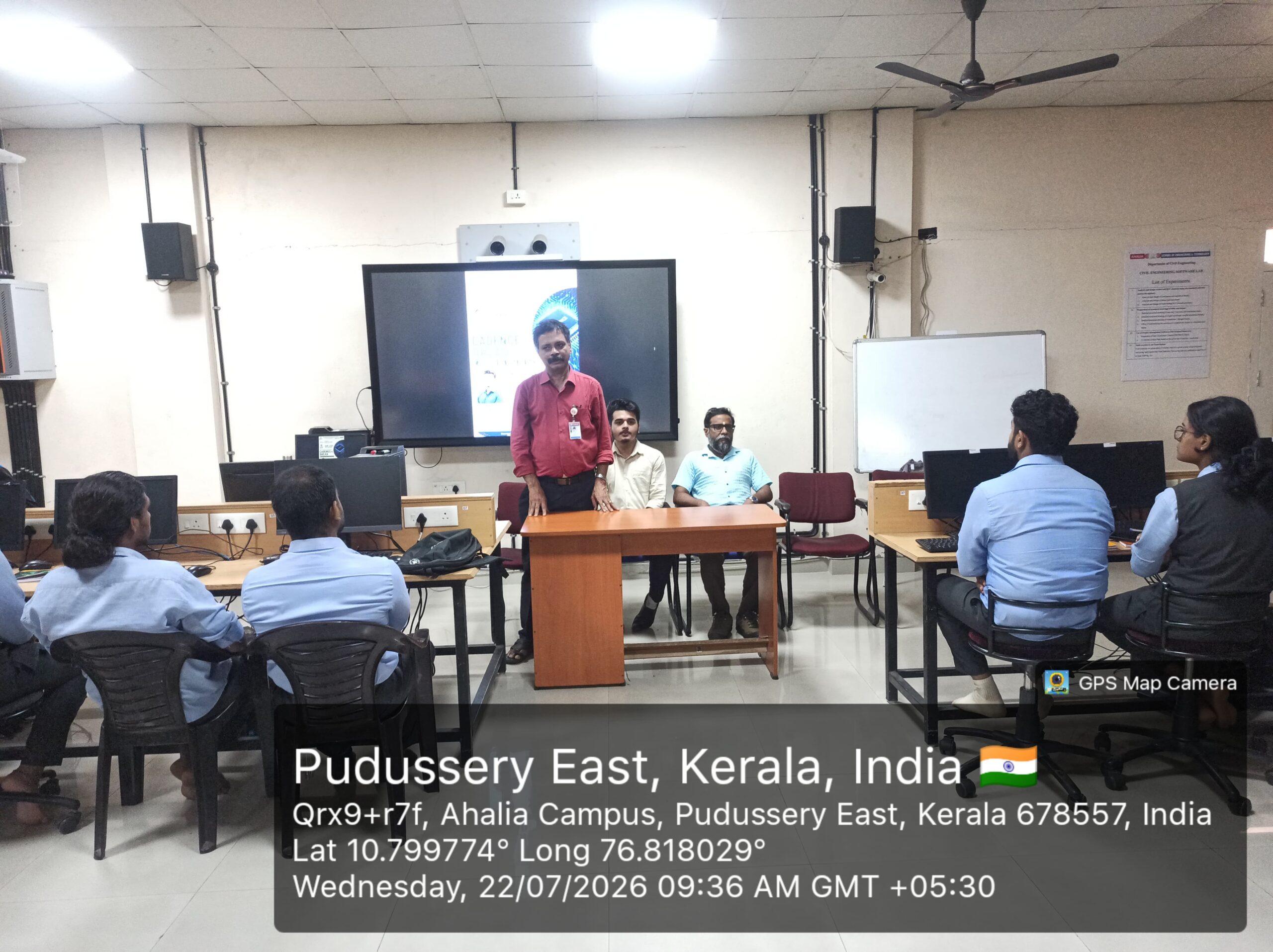
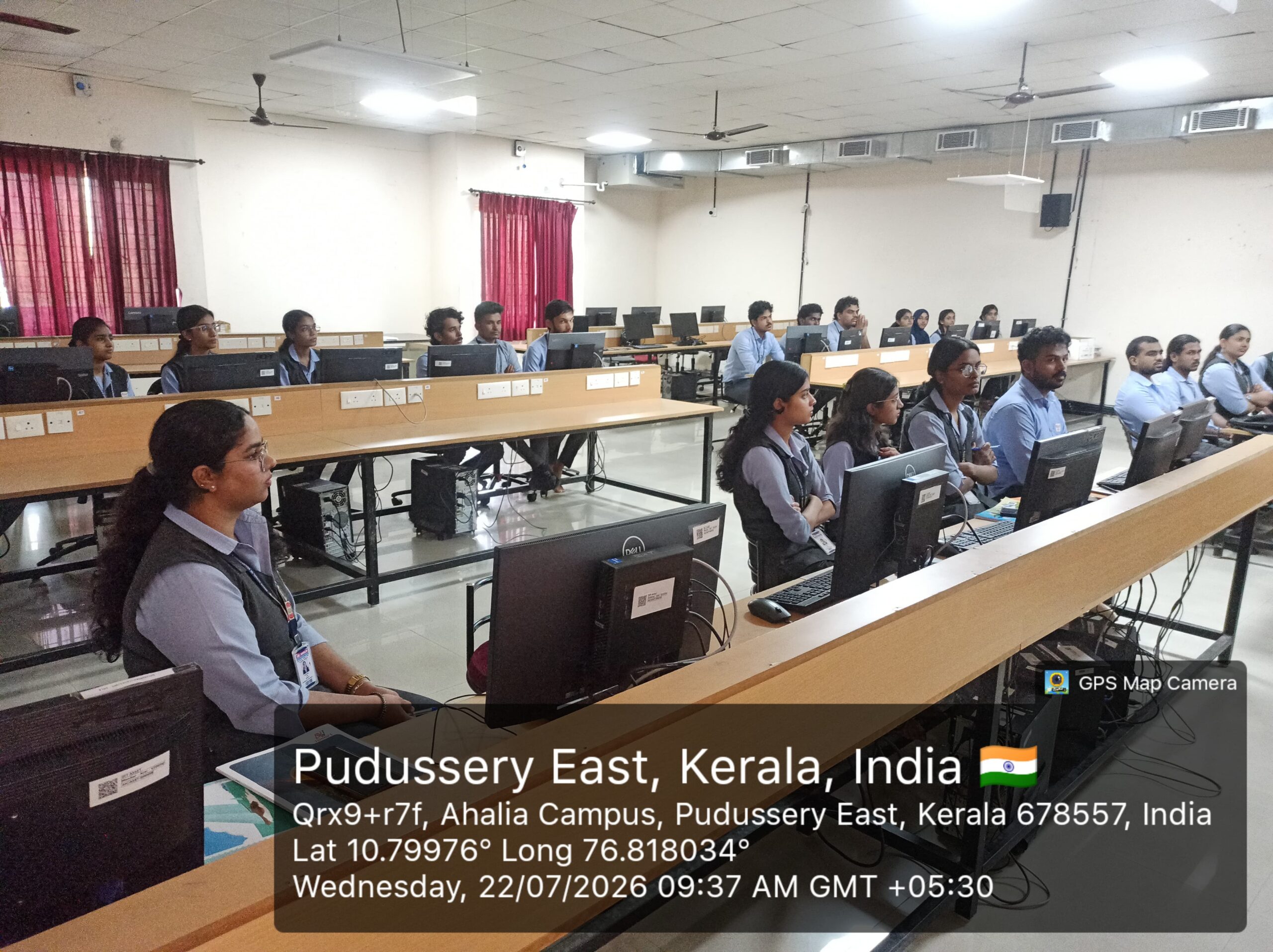
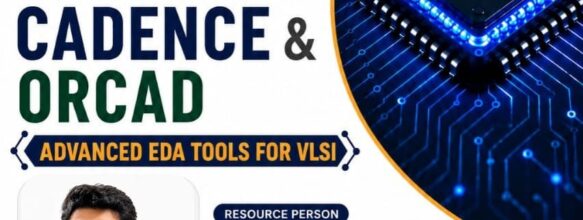
- The Department of Electronics and Communication Engineering organized a Three-Day Hands-on Workshop on Cadence and OrCAD from 22 July 2026 to 24 July 2026. Mr. B.R. Rakesh, Application Engineer, Trellisign, Bangalore, served as the resource person. The first two days focused on Analog and Digital IC Design flow, including RTL-to-GDSII implementation, Cadence Genus for synthesis, Spectre for analog simulation, and layout design. The third day covered OrCAD PCB design with hands-on sessions on schematic capture, PCB layout, routing, design rule checking, and manufacturing file generation. Students gained practical exposure to industry-standard EDA tools.
E. Learning Outcomes Achieved
- Explain the complete Analog and Digital IC Design flow.
- Apply Cadence Genus and Spectre tools for synthesis and simulation.
- Analyse the RTL-to-GDSII implementation process.
- Design basic PCB layouts using OrCAD.
- Utilize industry-standard EDA tools for projects and research.
Feedback Summary:
The programme received an excellent response from the participants. Students appreciated the relevance of the content, the effectiveness of the resource person, and the extensive hands-on sessions. The workshop improved their understanding of Cadence and OrCAD tools and increased their confidence in applying modern EDA tools for academic and career development.