
1. Event Details
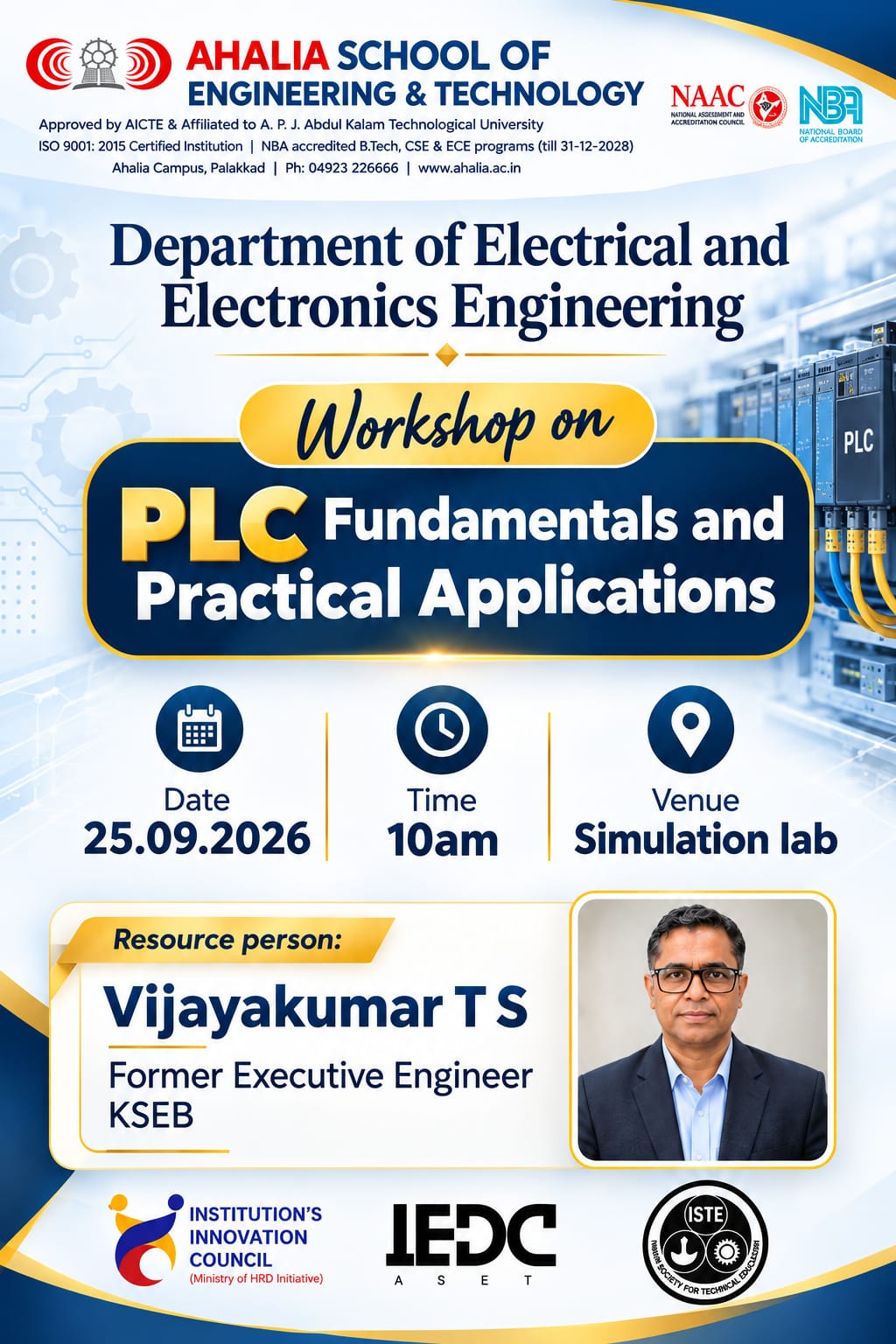
| Name of the Event | Workshop on PLC Fundamentals and Practical Applications |
| Organised by | Department of Electrical and Electronics Engineering |
| In association with | Institution’s Innovation Council (IIC), IEDC ASET and ISTE |
| Date | 25 September 2026 (Friday) |
| Time | 10:00 AM onwards |
| Venue | Simulation Lab, Ahalia School of Engineering & Technology |
| Resource Person | Mr. Vijayakumar T S, Former Executive Engineer, KSEB |
| Head of the Department | Dr. Pradip C |
| Faculty Coordinator(s) | Rosu V.P,AP/EE, Soumya S,AP/EE |
| Participants | Students of the Department of EEE (31 participants) |
2. Introduction
Programmable Logic Controllers (PLCs) form the backbone of modern industrial automation, used extensively in manufacturing plants, power stations, substations, water treatment and process industries. For electrical engineering graduates, a working knowledge of PLC hardware and programming is an essential industry-ready skill. Recognising this, the Department of Electrical and Electronics Engineering organised a workshop on “PLC Fundamentals and Practical Applications” on 25 September 2026 in the Simulation Lab, in association with the Institution’s Innovation Council, IEDC ASET and ISTE.
3. Objectives
- To introduce students to the architecture, working principle and scan cycle of a PLC.
- To familiarise students with ladder logic programming and basic instruction sets.
- To demonstrate practical applications of PLCs in industrial and power system automation.
- To bridge the gap between academic curriculum and industry practice through expert interaction.
4. Inaugural Session
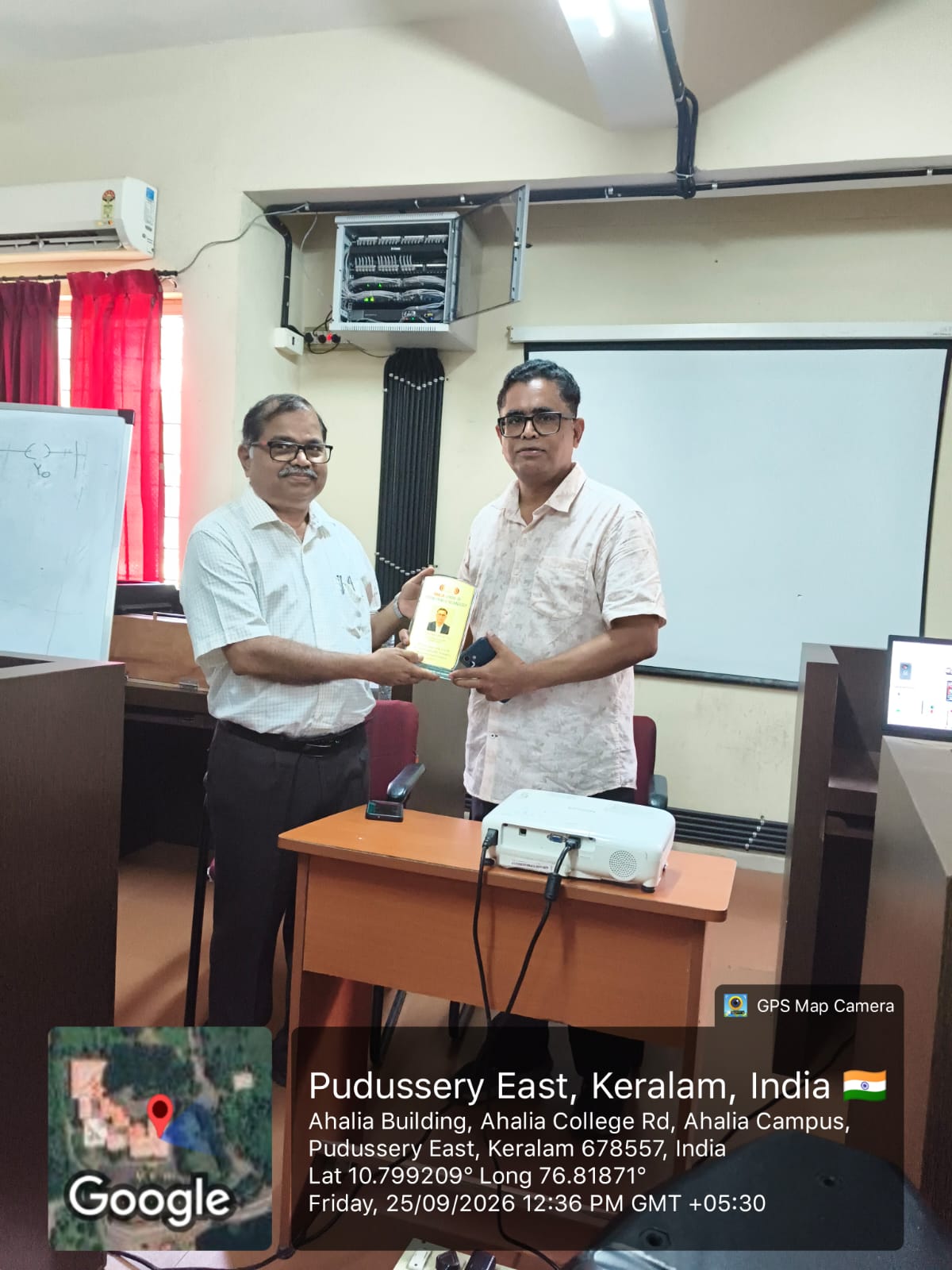
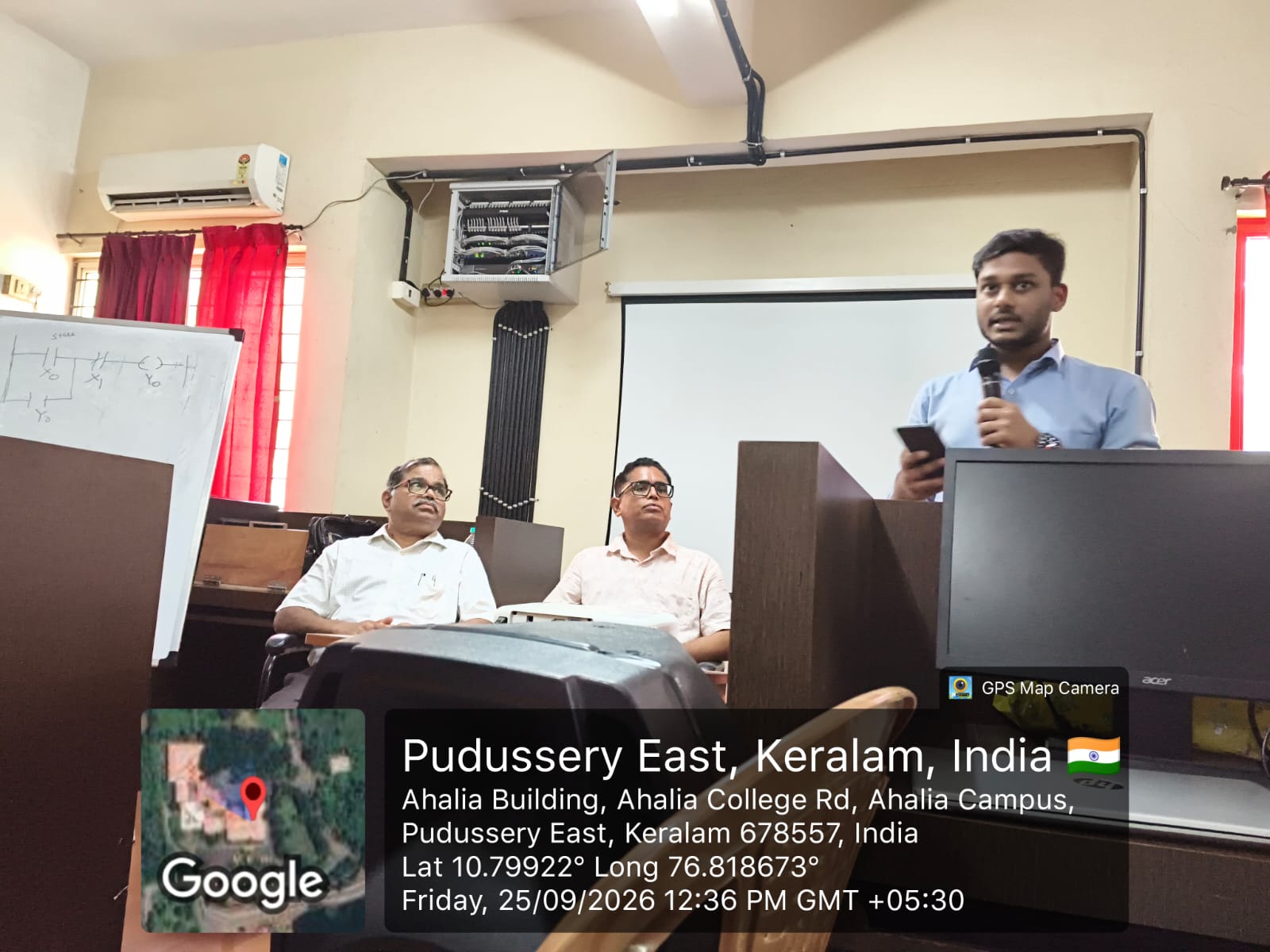
The programme commenced at 10:00 AM in the Simulation Lab. Welcome speech was delivered by Mr.Abiram of S7 EEE . Mr.Devarjun N S of S5 EEE introduced the resource person. The session was presided over by Dr. Pradip C, Head of the Department of Electrical and Electronics Engineering. He highlighted the growing relevance of automation and PLC skills for electrical engineers. After the session vote of thanks was delivered by Mr. Abhijith of S7 EEE.
5. About the Resource Person
Mr. Vijayakumar T S is a Former Executive Engineer of the Kerala State Electricity Board (KSEB). With long years of field experience in the power sector, he brought valuable practical insight into how control and automation systems are deployed in real-world electrical installations.
6. Session Summary
The resource person began with the evolution of industrial control from hard-wired relay logic to programmable controllers, explaining the limitations of relay panels and the advantages PLCs offer in flexibility, reliability and ease of troubleshooting. The key topics covered during the workshop were:
- Basic architecture of a PLC: CPU, memory, power supply, input and output modules, and communication interfaces.
- PLC scan cycle: input scan, program execution and output update.
- Types of inputs and outputs, including digital and analog I/O, sensors and field devices.
- Ladder logic programming: contacts, coils, latching circuits, timers and counters.
- Practical applications such as motor start-stop control, DOL starter logic, interlocking, sequential operations and traffic light control.
- Role of PLCs and SCADA in power system automation, substations and industrial plants.
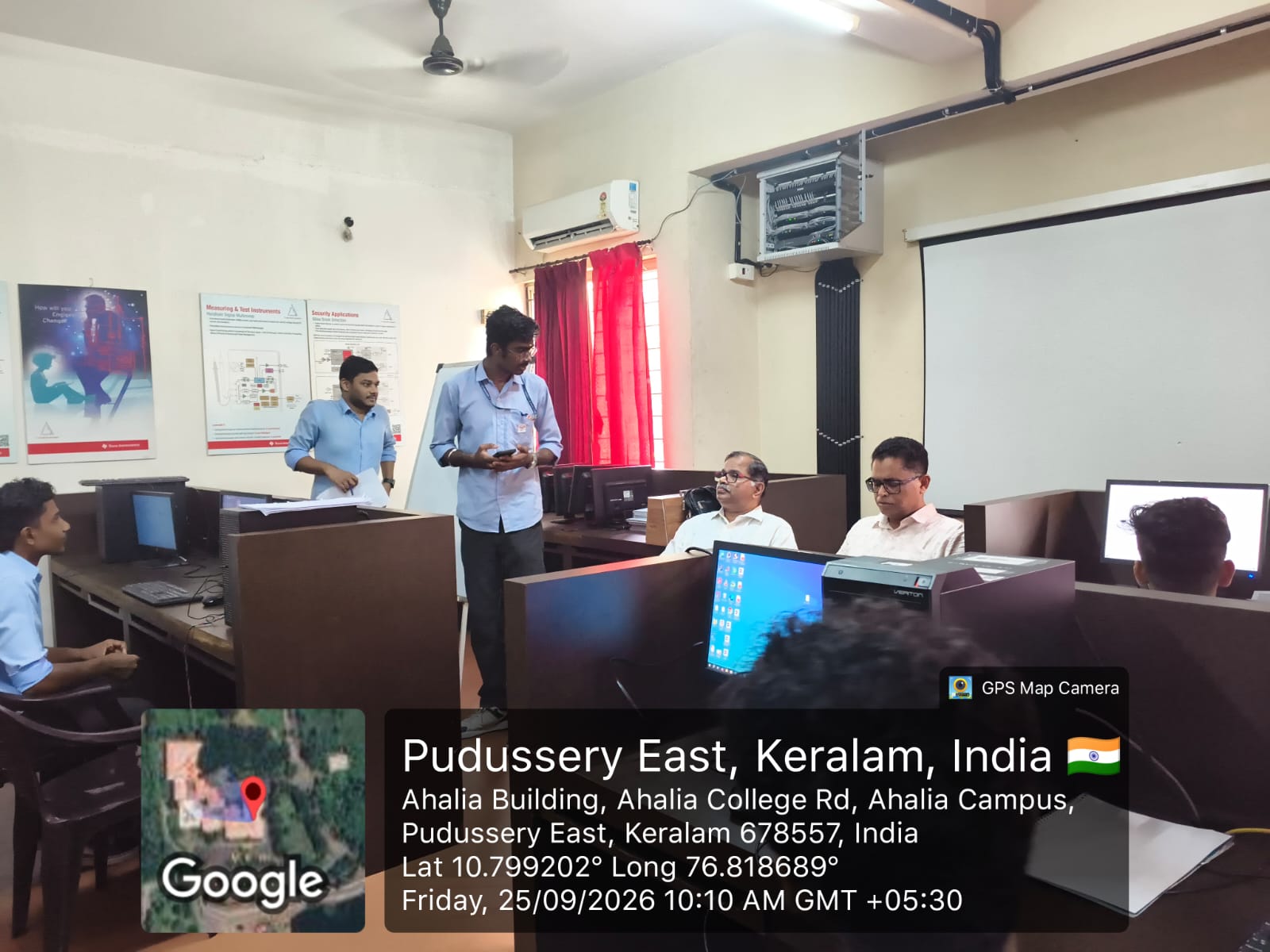
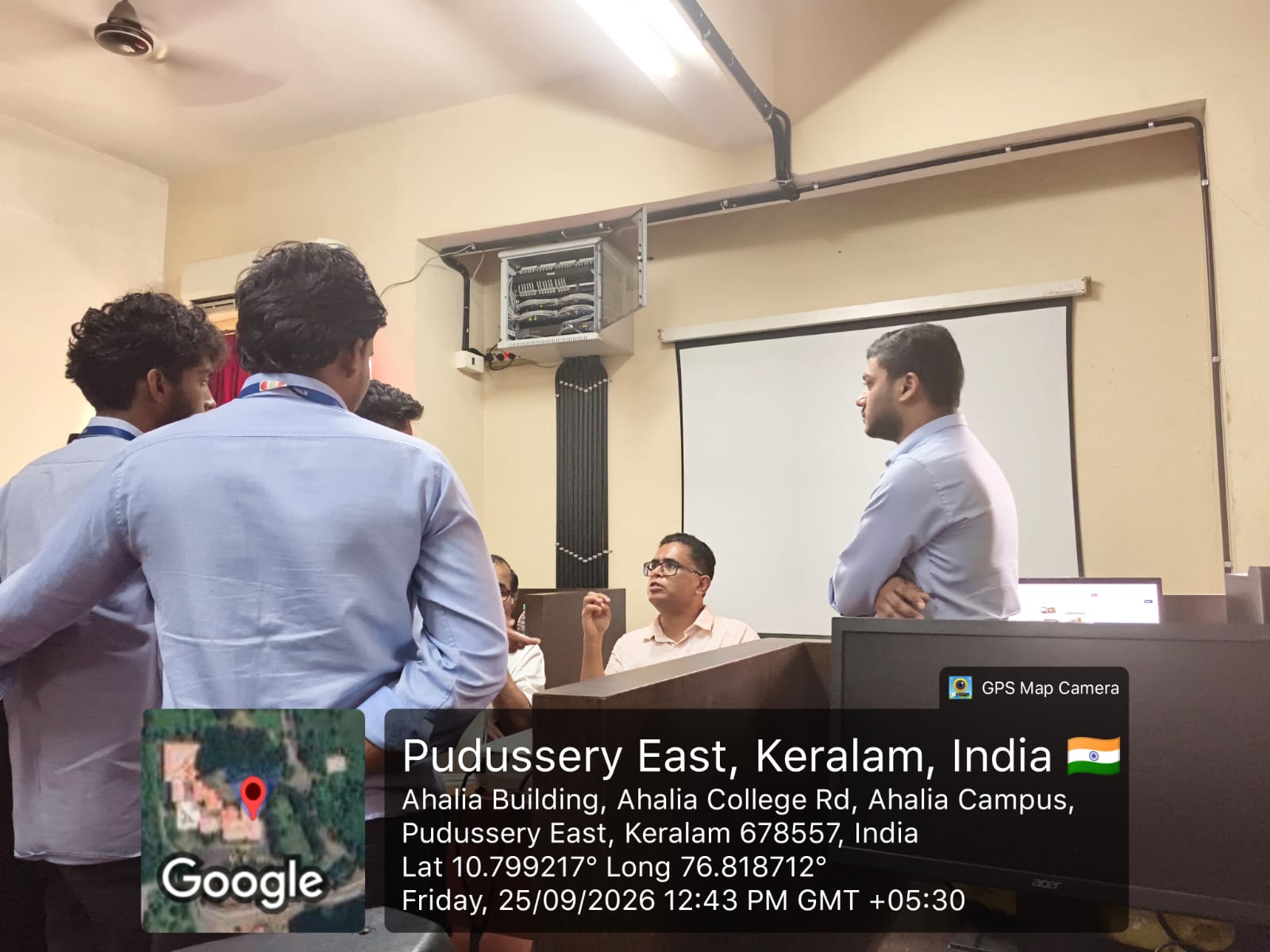
Students used the computer systems in the Simulation Lab to follow the demonstrations and to develop and simulate simple ladder logic programs. The session was highly interactive, with the resource person sharing field experiences from KSEB and answering students’ questions on programming, troubleshooting and career opportunities in automation.
7. Outcomes
On completion of the workshop, participants were able to:
- Explain the architecture and operating principle of a PLC.
- Develop simple ladder logic programs using timers, counters and interlocks.
- Relate PLC-based control to practical industrial and power system applications.
- Appreciate the scope of automation as a career domain for electrical engineers.
8. Conclusion
The workshop was informative and beneficial to the students, providing valuable hands-on exposure to PLC programming and practical insights into industrial automation. With increasing industrialisation and the growing adoption of automation technologies across industries, the demand for skilled PLC programmers and automation experts is steadily increasing. This creates promising career opportunities for electrical engineers in PLC programming, industrial control systems, automation, and maintenance. The programme highlighted the relevance of acquiring practical skills in these emerging technologies and reinforced the importance of continuous learning to meet evolving industrial requirements..